


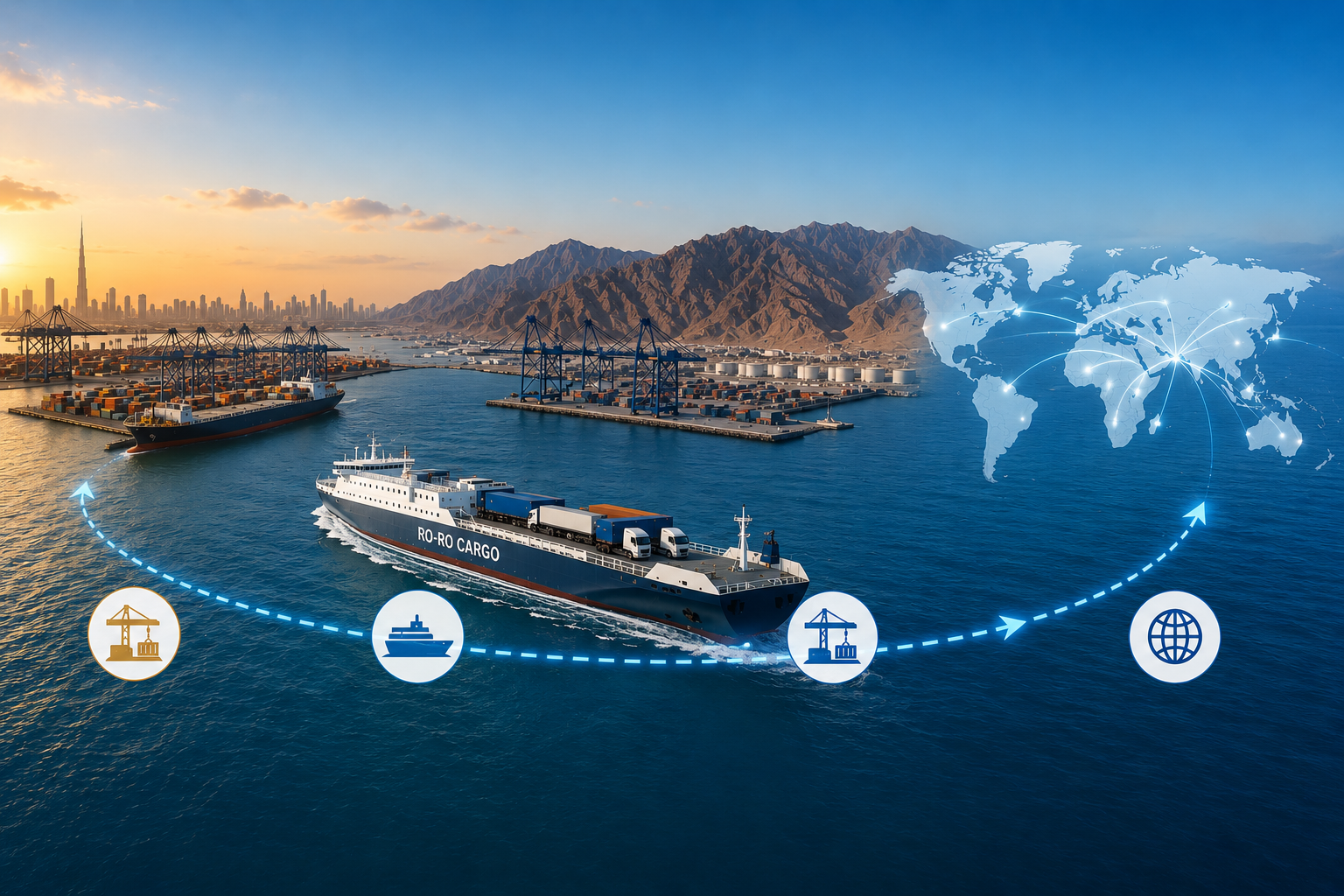
The United Arab Emirates (UAE) has just announced one of the most ambitious strategic shifts in its recent history: ultimately eliminating any dependence on the Strait of Hormuz.
The Minister of State for Foreign Trade, Dr. Thani Al Zeyoudi, stated it clearly: the UAE aims for “zero” dependence on this maritime passage, “whether the strait is open or not.”
This statement goes far beyond energy logistics. It affects the entire economy and, by extension, the real estate markets of Dubai and Abu Dhabi.
Why Now: The Lesson of an Unprecedented Crisis
The Strait of Hormuz is one of the most critical gateways in the global economy. Before the maritime route was closed, approximately one-fifth of the world’s crude oil and liquefied natural gas (LNG) passed through it every day.
The UAE had built a significant part of its trade model around the assumption that this passage would remain open and accessible. Regional tensions that erupted in early 2026 challenged that assumption.
Since the closure of the strait, maritime traffic has fallen dramatically, while the cost of transporting a barrel of oil has increased by several dollars, adding billions of dollars in additional friction to global markets every month.
It was in this context that the government drew a lesson, summarized by Dr. Al Zeyoudi:
“In difficult times, you always identify your vulnerabilities and start working on them.”
The Strait of Hormuz had revealed itself to be the UAE’s most exposed vulnerability.
The Concrete Plan: Ports, Pipelines and Rail
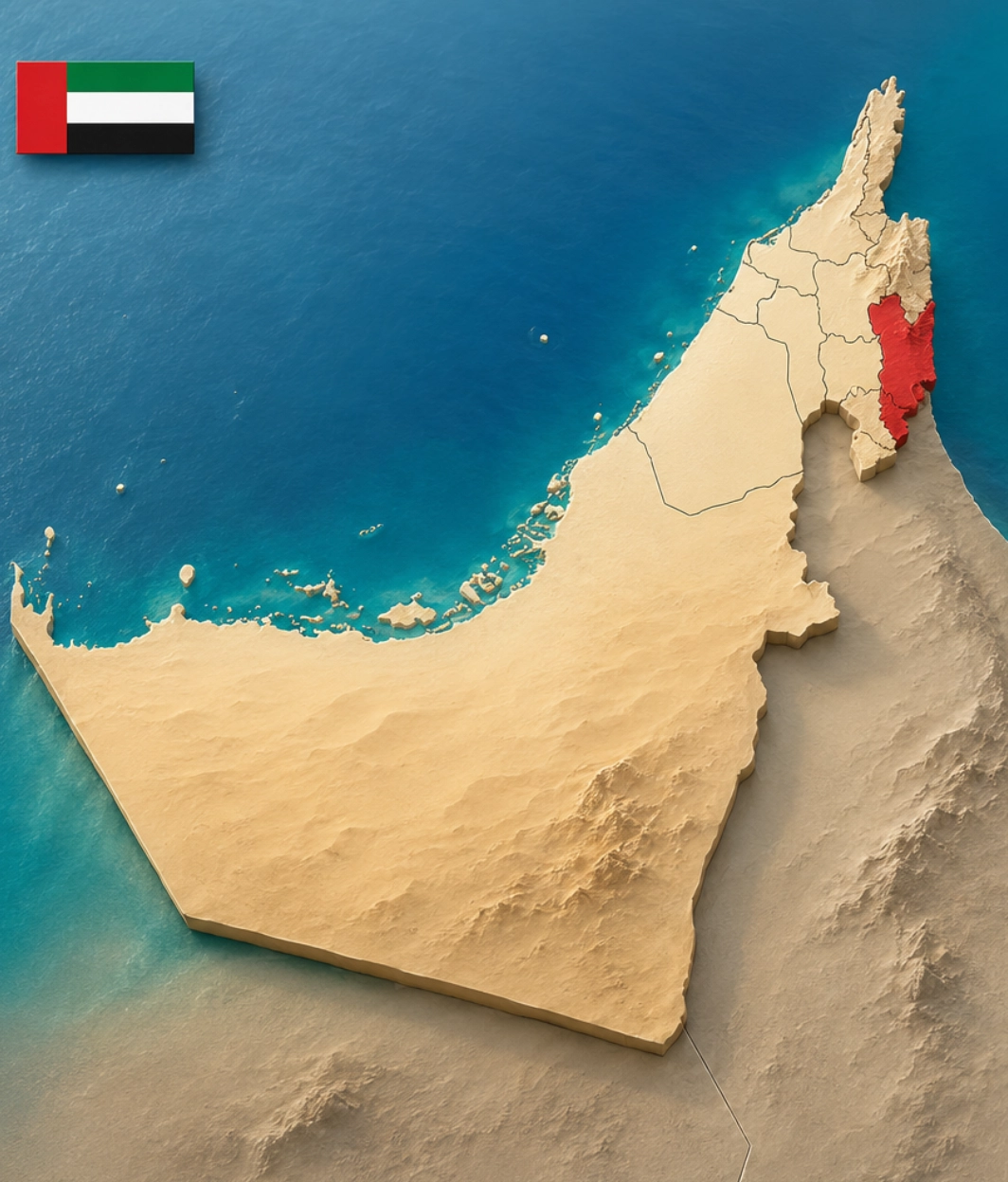
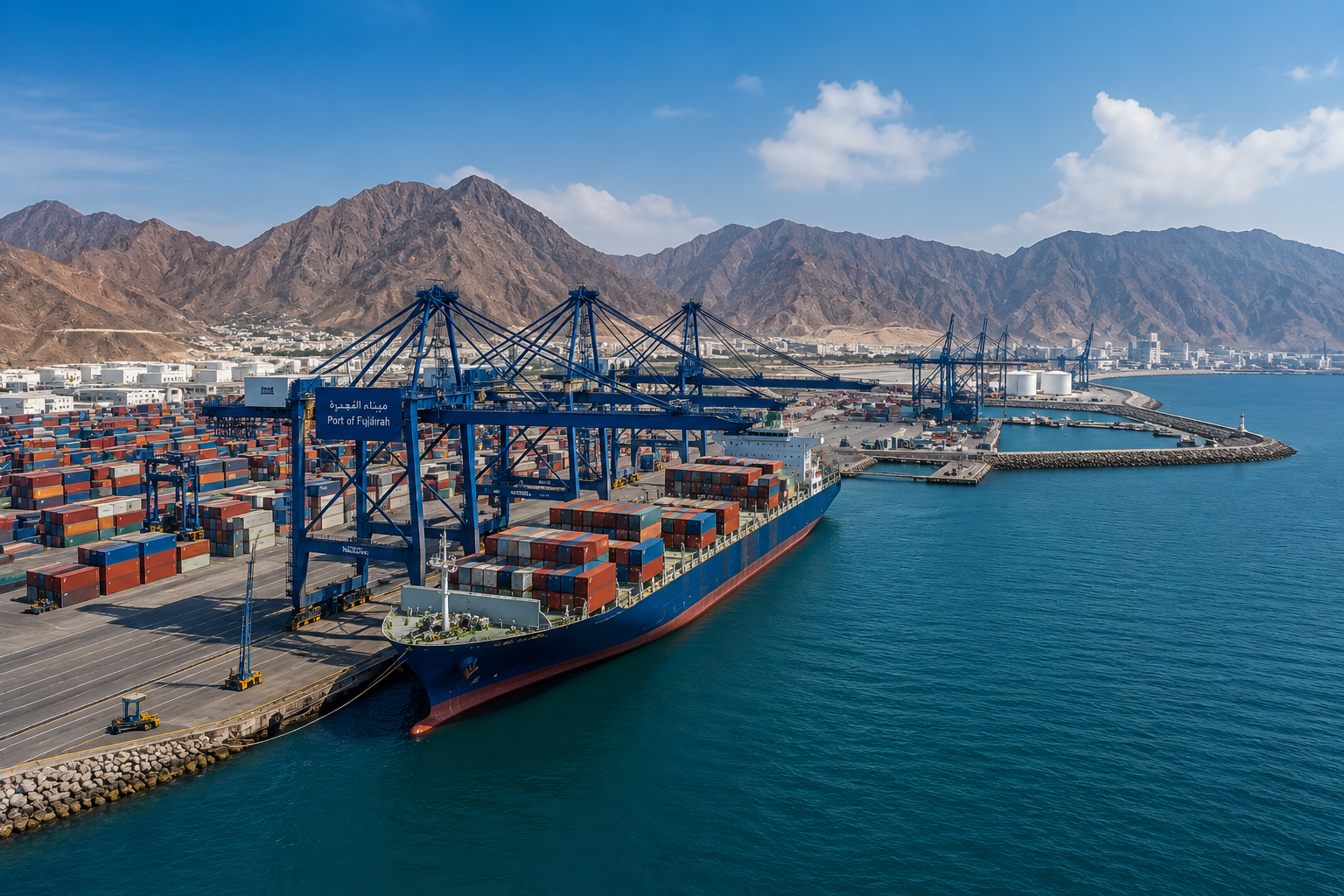
At the heart of the project is a massive expansion of the UAE’s eastern ports — Dibba, Fujairah and Khor Fakkan — all located on the Gulf of Oman coast, outside the Strait of Hormuz.
This geographical position is crucial: goods and energy could reach international markets without ever entering the Arabian Gulf or passing through the strait.
The port expansion will be complemented by several major infrastructure projects:
- New pipelines. The UAE already has the Habshan–Fujairah pipeline, with a capacity of approximately 1.5 million barrels per day, which proved to be a lifeline during the closure of the strait. In May 2026, ADNOC announced the acceleration of a second pipeline to Fujairah, with the objective of doubling crude oil export capacity to 3 million barrels per day by 2027. A third oil pipeline is also being considered to directly connect inland fields to eastern coastal terminals.
- Rail and road networks. A major rail expansion is planned to connect the eastern ports with Dubai and Abu Dhabi’s main urban and industrial centers, helping contain higher inland transportation costs.
- New LNG and petrochemical capacity. The UAE is studying the creation of dedicated LNG and petrochemical export hubs along the eastern coast, allowing these commodities to reach global markets without passing through the Arabian Gulf.
- At least one new port. Dr. Al Zeyoudi confirmed that the country will build at least one new port along the same eastern coastline.
It is important to clarify the current status of these projects: they are still in the feasibility stage. No specific timeline or budget has been announced, although the minister acknowledged that the investments would amount to billions of dollars.
Jebel Ali, the world’s largest container hub outside Asia, and Khalifa Port in Abu Dhabi will remain major redistribution platforms.
The Economic Impact: Resilience Comes at a Cost
From a macroeconomic perspective, the UAE entered this crisis from a position of strength.
The country’s GDP grew by 6.2% in 2025, reaching AED 1.9 trillion (approximately USD 517 billion), driven primarily by the non-oil sector, which grew by 6.8%.
Tourism, finance, logistics, trade and technology — this diversification helped cushion the impact when energy flows were disrupted.
There is also a paradoxical effect on oil revenues. Although exported volumes were lower than usual, the increase in crude oil prices caused by the global disruption, according to Moody’s, more than offset the decline in volumes. The agency forecasts an average crude oil price of $90–$110 per barrel for 2026.
Moody’s also maintained its strong ratings for the UAE, highlighting the country’s “strong shock-absorption capacity.”
The UAE has also demonstrated operational agility through measures including maintaining oil exports via the Fujairah pipeline, accelerating air freight for certain goods, and strengthening pre-clearance procedures in countries such as Egypt and India to facilitate imports.
The net cost of the plan remains significant: higher logistics and insurance costs in the short term, followed by a multi-billion-dollar investment bill over the medium term.
The trade-off, however, is a structurally more resilient economy, less vulnerable to geopolitical disruptions, while the logistics sector — once fully developed — could further strengthen the UAE’s position as a global hub.
The Impact of Port Diversification on Real Estate
The major expansion of the eastern ports intersects with the real estate market in two concrete ways:
1. It strengthens the safe-haven narrative
A government taking visible and ambitious steps to reduce its strategic vulnerability sends a strong signal to long-term investors.
It changes the perception of the crisis: rather than being a reason to leave, the government’s response becomes evidence of proactive governance, supporting confidence in prime assets and end-user properties.
2. It increases the value of industrial and logistics real estate
One of the less-discussed consequences of the disruption to maritime routes has been the sharp increase in demand for warehouses and logistics facilities, as regional companies seek protection against supply-chain disruptions.
As the UAE invests in eastern ports, pipelines, railways and new ports, industrial real estate around these corridors — as well as around major hubs such as Jebel Ali and KIZAD — becomes strategically more valuable.
The emirates along the eastern coast, particularly Fujairah, are therefore positioned to benefit from sustained infrastructure investment in the years ahead.